
Changing an Open Graph image from SVG to PNG broke my CI test
I changed the social image metadata on my Jekyll blog, and a regression test failed before deployment. The old assertion expected an SVG filename and its original height. The new Open Graph asset was a PNG. The mismatch is visible in PR #27.
Four Korean/English article pairs, eight posts, previously pointed their Open Graph and Twitter image metadata at SVG diagrams. To avoid relying on SVG support in every link-preview renderer, I kept those diagrams inside the articles and exported 1200×630 PNGs for the metadata. The posts shared one diagram across languages, so the change needed seven PNG files, not eight.
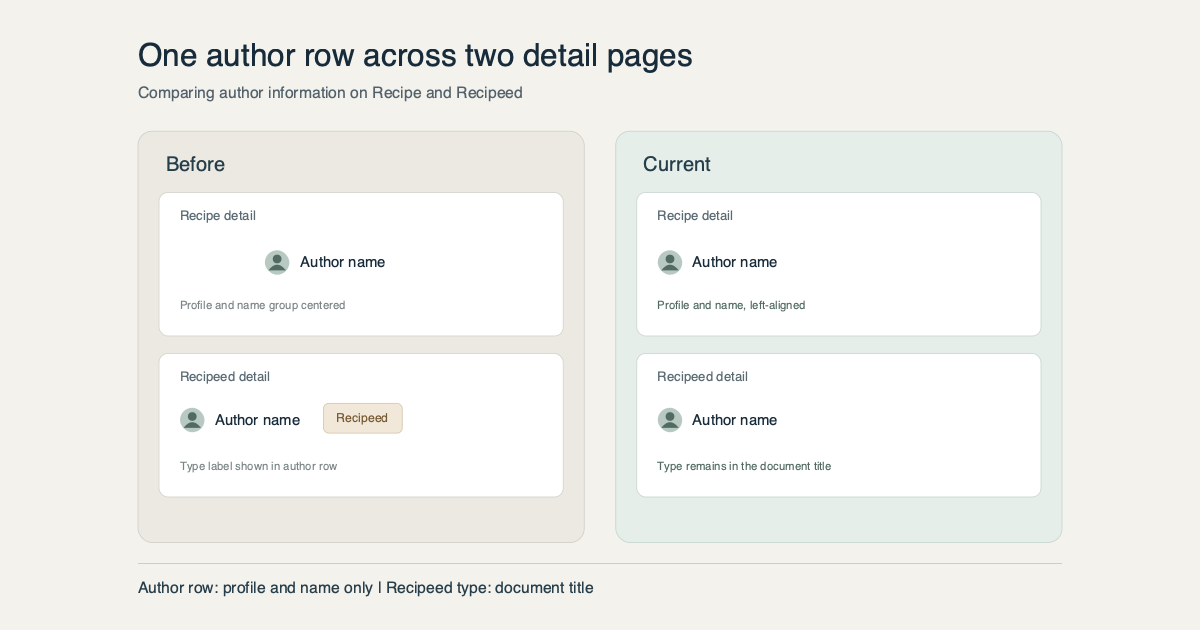
The test was checking an old implementation detail
The existing tests/test_ga4_report_window_release.py checked for timeline-ko.svg or timeline-en.svg in the GA4 case study’s image metadata. It also expected a height of 620 pixels. After the change, the social image paths pointed to files such as timeline-ko-og.png, with a height of 630 pixels.
The first GitHub Actions run failed. I updated the test to check two separate contracts: the original SVG still appears in the article body, and the social metadata points to a valid 1200×630 PNG.
The PNG check can be reduced to this small Python example:
from pathlib import Path

png = Path("_posts/spoonie-author-header-consistency-en/author-header-en-og.png").read_bytes()
assert png[:8] == b"\x89PNG\r\n\x1a\n"
assert png[12:16] == b"IHDR"

width = int.from_bytes(png[16:20], "big")
height = int.from_bytes(png[20:24], "big")
assert (width, height) == (1200, 630)
It tests the file signature and dimensions. It cannot tell whether the diagram is legible or whether a particular social platform will fetch the image.
The first Korean raster export also lost text
I inspected the first generated PNGs rather than treating successful file creation as visual QA. Some Hangul text was missing from the Korean previews.
For those derivatives, I rendered the existing SVGs again with an installed Noto Sans CJK KR font. I did not change the source diagrams or the inline images in the articles. I checked both the full-size Korean output and a reduced contact sheet, because legibility at social-preview scale matters.
What the deployment proves
The updated PR #27 passed CI and merged on November 10, 2026. The GitHub Pages build and deployment then succeeded.
I fetched all eight published article URLs and their seven PNG assets. Every URL returned HTTP 200; the images were served as image/png at 1200×630, with SHA-256 hashes matching the local release files. The rendered pages pointed og:image and twitter:image at the PNGs while preserving their canonical URLs, reciprocal hreflang tags and original inline SVGs.
Those checks establish that the site serves the intended assets. They do not establish how Instagram, Threads or another platform renders a link card. I have no verified card-preview screenshot, click result or readership increase from this change.
A related UTF-8 content QA incident showed that a correct file hash can coexist with damaged text. This release exposed another boundary: file-type tests, actual pixel inspection and live URL checks answer different questions. The PR #27 file diff shows the test change and the published assets.