My astronomy diagram essay was published by EUSci
한국어판: EUSci에 우주 과학 도해 기고문이 실렸다
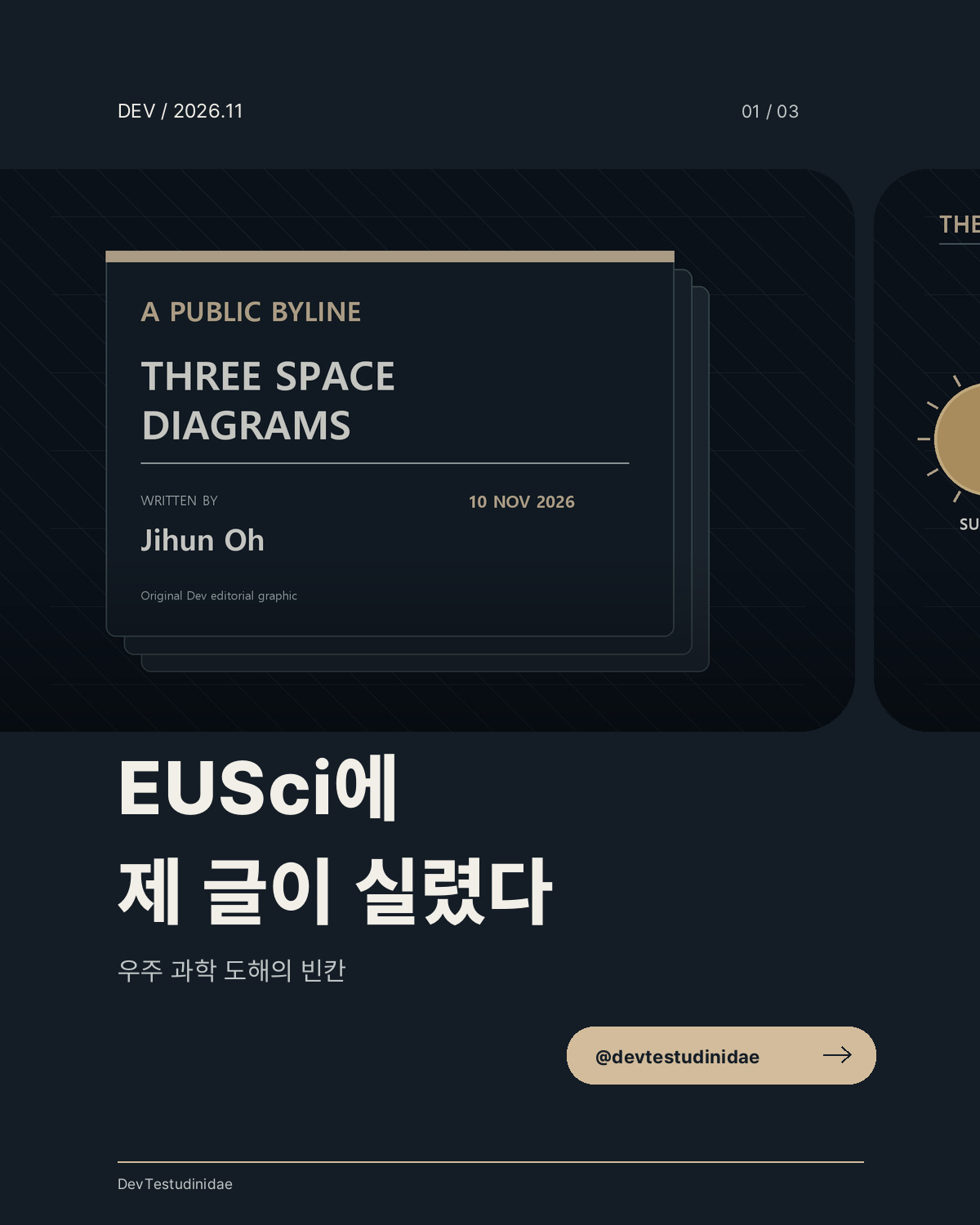
On November 10, 2026, EUSci published my article, Three Space Diagrams, Three Missing Clues. The page identifies Jihun Oh as the author and credits Priscilla Wong, EUSci’s Head Online News Editor, for editing. The essay grew out of a design problem I encountered while building the interactive astronomy lessons in Space Atlas.
An astronomy diagram can be accurate within its chosen view and still invite the wrong conclusion. A learner may not know where the observer stands, which direction remains fixed or what lies outside the picture’s plane. In a static illustration those omissions are easy to miss. When I build a simulator, I have to decide how to make them visible through the controls and the model.
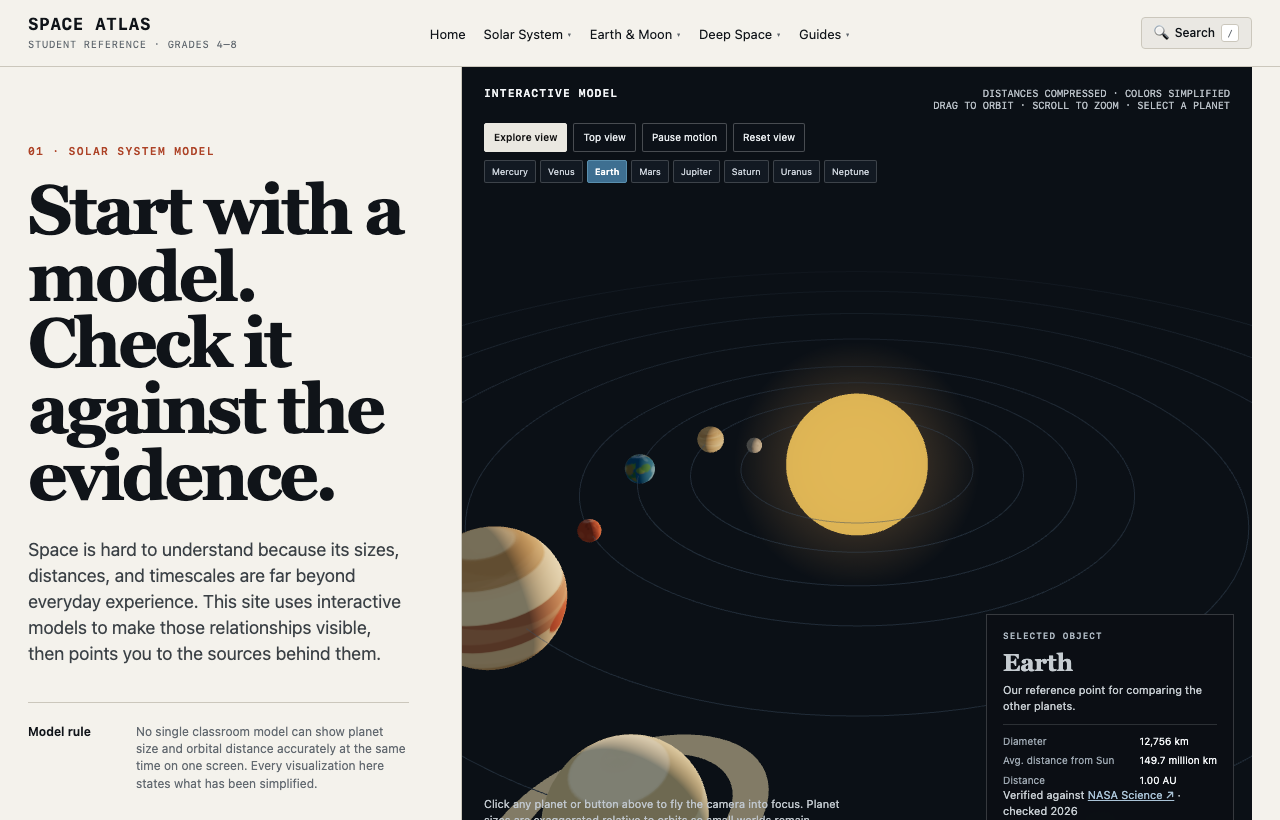
The engineering behind the explanation
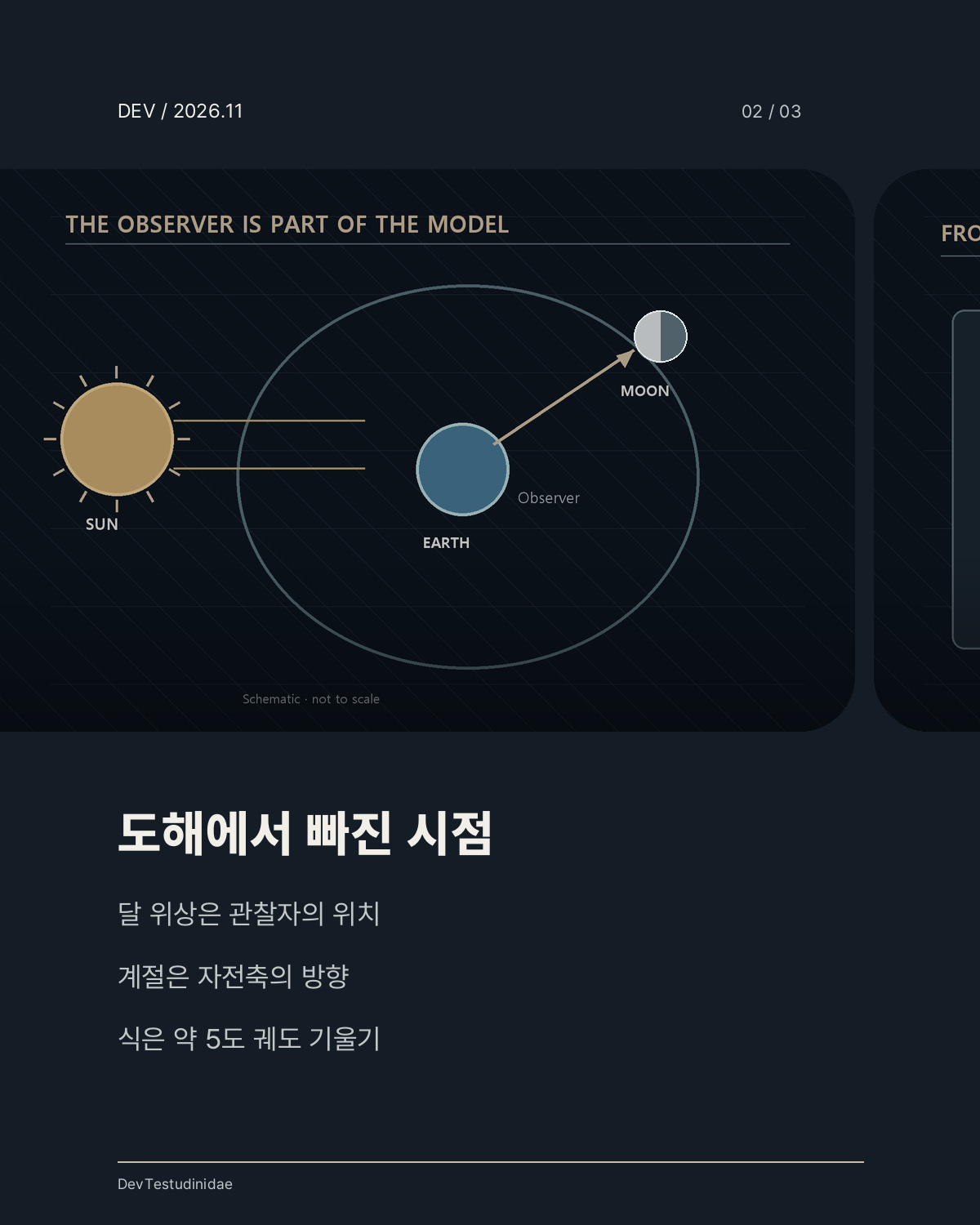
The Moon Phases model separates the Moon’s sunlit hemisphere from the part that appears bright to an observer on Earth. Moving the Moon through its orbit changes what that observer sees. Without a stated viewpoint, a diagram of first quarter does little to explain why half of the visible lunar disc is illuminated.
My Seasons model deals with a different omission. Earth’s axis stays pointed in approximately the same direction in space as Earth orbits the Sun. That orientation matters more to the explanation of the seasons than the changing Earth–Sun distance. A learner needs to see which direction the axis points at opposite orbital positions.
Eclipses show where a flat view becomes especially misleading. The Moon’s orbital plane is inclined by roughly five degrees to the ecliptic. A drawing that leaves out the inclination can make monthly eclipses seem inevitable. In the EUSci essay I used the distinction between an overhead view, a side view and orbital nodes to explain the missing geometry.
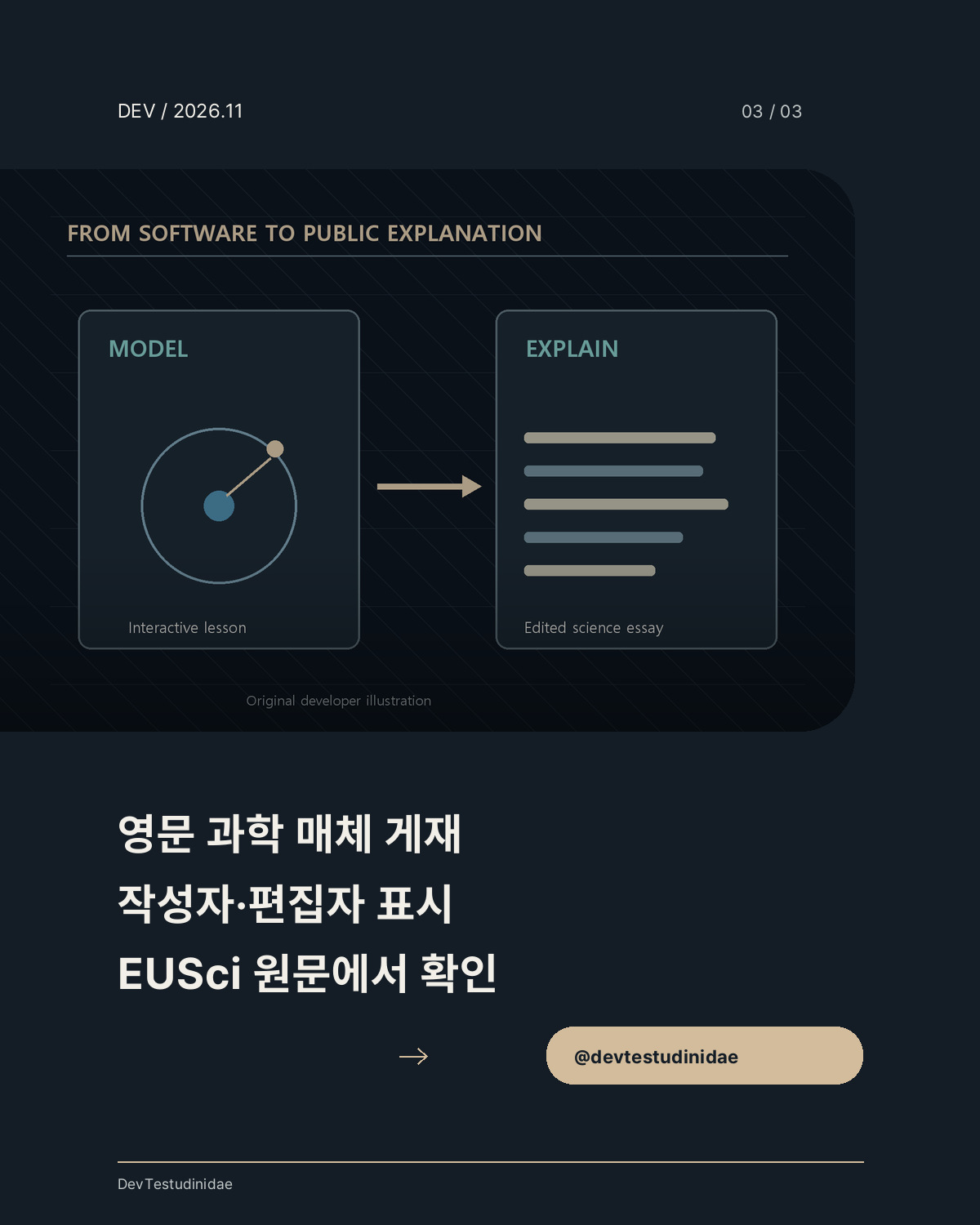
For each lesson, I chose the relationships a learner needed to inspect and documented what the simplified model could not establish. That was the same judgment I had to make when moving from interactive software to a public science article.
What the publication demonstrates
The result is a publicly accessible article with an author credit and a named editor. EUSci’s Figure 1 caption reads “Original illustration by Jihun Oh.” I drew it to connect the observer’s viewpoint, Earth’s axial direction and the Moon’s inclined orbit in a single schematic. It gives educators, reviewers and potential collaborators a way to examine my explanation of a problem, then compare it with a working Moon Phases lesson. The byline provides a concrete writing sample alongside the software.
The article discloses AI assistance during drafting and editing and says its scientific explanations were checked against linked NASA references. Publication by EUSci is the verified achievement. It does not demonstrate formal university endorsement, classroom adoption or measured learning gains.
- Read the EUSci article and editorial credit
- NASA Science: Moon phases
- Space Atlas project case and earlier engineering overview
Three original summary cards
I made these cards to summarise the published essay and the model-design work behind it. They use my own new artwork, with no photographs or figures reproduced from EUSci. The Moon-phase scene is schematic and is not drawn to scale.